Behind the Saddle Hydration: Why Bottle Position Matters More Than You Think
Part 2 · Why position matters
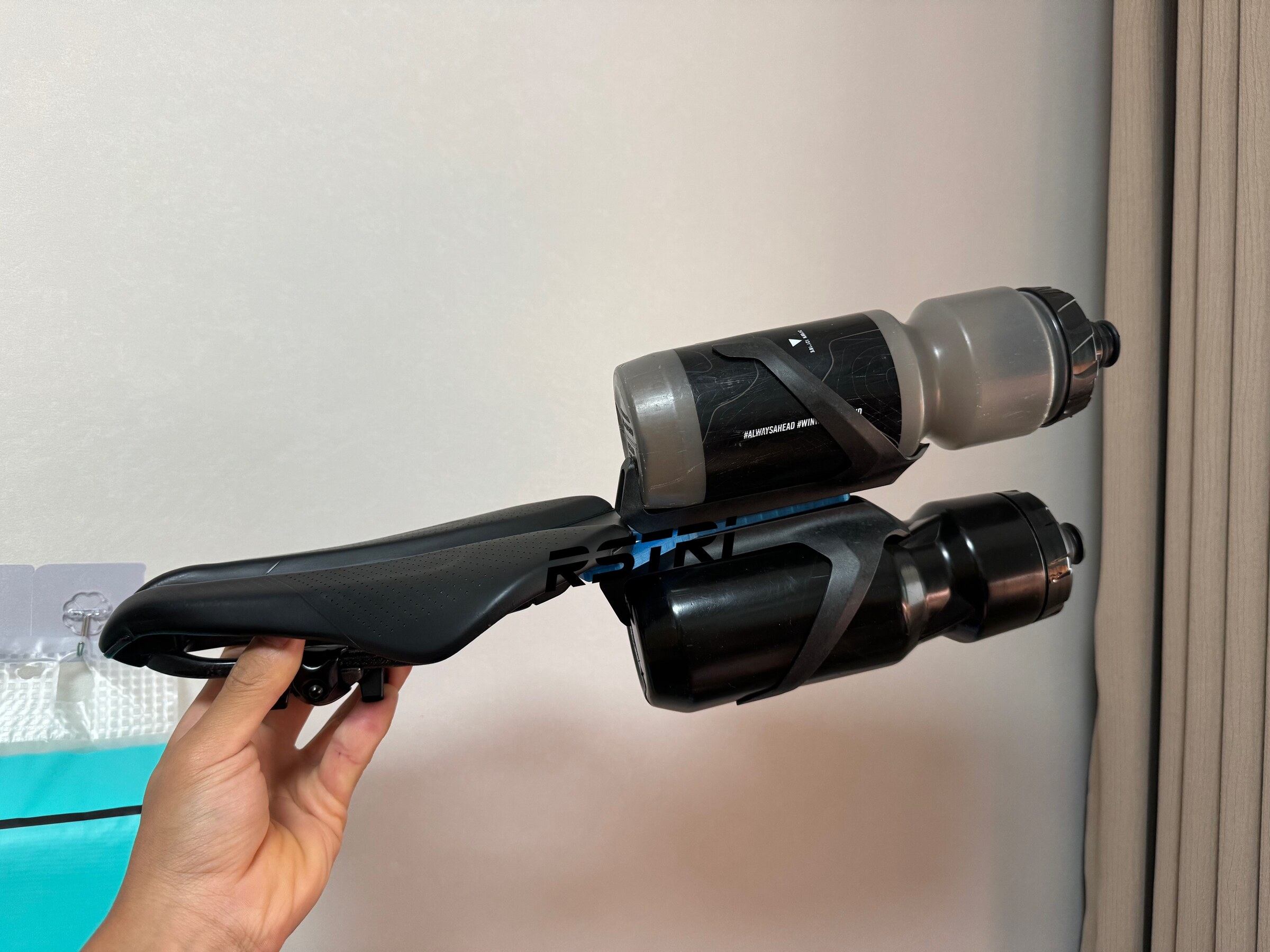
RSTRI saddle-specific rear hydration installation example. Photo: RSTRI.
A bottle behind the saddle may sit in the rider’s wake, but height, angle and distance change the airflow it meets. The relevant question is where the bottle sits relative to this rider, not whether BTS is universally fast.
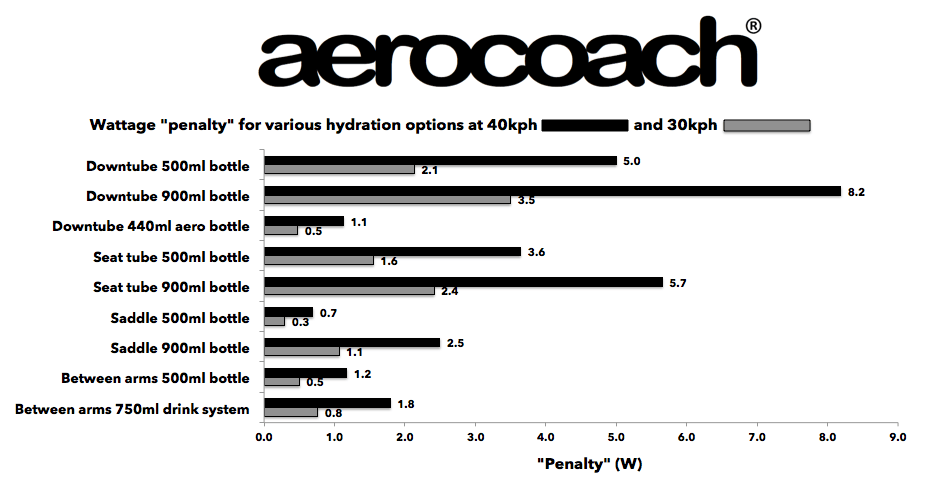
This is Part 2 of our hydration-position series. Part 1 compared bottle locations using AeroCoach's test. Here we ask a different question: why might a bottle behind the saddle work, and why do two BTS (behind-the-saddle) setups behave differently?
Part 1 — Where Should You Carry Your Water?
https://www.rstri.cn/en/tech/triathlon-bottle-placement-bta-frame-bts ↗
“Behind the saddle” is not one position
Two rear mounts may both be labelled BTS, yet hold the bottle at different heights, angles and distances from the rider. The saddle can also move relative to the rider's pelvis. None of those variables is fixed by the label. Aerodynamic drag belongs to the whole rider-and-bike configuration, not to a mounting category.
The rider's wake
A moving rider disturbs the air behind the back, hips and saddle. A bottle in this wake can face different local airflow from a bottle exposed on the downtube. This is a useful explanation for why some rear positions show a small drag penalty. It does not mean that disturbed air creates zero drag, or that any object placed there improves aerodynamics.
What TRI247 reports
TRI247 describes an interpretation attributed to Ingmar Jungnickel, a former Specialized aerodynamicist who modelled bottle positions with computational fluid dynamics. In that explanation, airflow can turn downward from a curved back; a bottle held close to the saddle and relatively flat may affect how the flow leaves the rider, somewhat like a spoiler. This is a proposed mechanism for particular positions, not an RSTRI measurement or a guarantee that adding a bottle reduces drag. TRI247 also quotes Quintana Roo engineer Brad DeVaney: the useful bottle angle depends on the rider's position and dimensions. A universal “best angle” is therefore unsupported.
Distance changes the problem
A bottle tucked close behind the rider may remain within the body's wake. Shift it farther rearward and more of it may reach faster, less disturbed air. A gap between rider and bottles can also leave the bottles exposed. This is why the position of the saddle and the rider's actual riding posture matter as much as the name of the mount. Small changes deserve testing, but the cited articles do not establish one precise distance that works for everyone.
Height and angle are configuration variables
A high or steep bottle may project into air that a lower, flatter bottle avoids. But “flatter” is not a universal instruction: the rider's back angle, saddle geometry, cage, bottle size and access all interact. The defensible goal is a compact, usable configuration appropriate to a specific rider. Without testing that exact setup, no angle can be called the fastest.

One bottle or two?
Two bottles carry more fluid, but also widen or lengthen the rear assembly, add projected area and load the mount differently. They can change each other's flow as well as bottle retention. AeroCoach's 2020 test measured individual configurations on one rider; it did not establish a universal one-versus-two rule for every BTS mount. Race distance and aid-station access set the capacity requirement. Aerodynamics then helps decide how to carry that capacity.
Design for the real road
A rear system must hold bottles over vibration, permit safe access, fit the saddle rails and remain stiff enough in use. A fast-looking position is no help if bottles eject or a rider must abandon a stable posture to drink. Check cage grip, clearance, mounting security and the intended single- or dual-bottle layout before treating aerodynamic refinement as the final step.
Where RSTRI fits
RSTRI's triathlon-saddle rear hydration system is developed around saddle-specific mounting space rather than one universal bracket. Depending on the saddle, it can use a single bottle, vertical dual bottles or side-by-side dual bottles. The choice of layout and a compact position are design considerations, not proof of a measured watt saving. Confirm the exact saddle model and available configuration with RSTRI; installation photos are examples, not blanket compatibility certificates. The related product appears below for readers who want to inspect the mounting options.
The useful question
The question is not simply “Is BTS aero?” It is “Where does the bottle sit in this rider's wake, and can that position be used reliably in a race?” Treat a compact setup as a hypothesis to verify on the actual rider and bike.
Sources and further reading
TRI247 — What's the most aero way to carry water on your triathlon bike? (editorial reporting of Jungnickel and DeVaney's explanations):
AeroCoach — Water bottle aero testing (the original numerical test cited for context):