
Where Should You Carry Your Water? Aero Testing of BTA, Frame and BTS Bottle Positions
Part 1 · Where the bottle sits
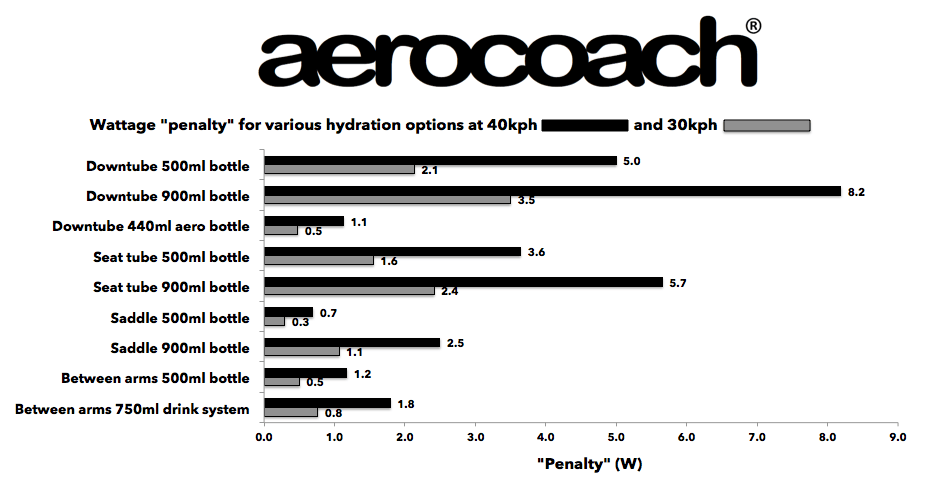
Original 2020 chart of hydration penalties at 40 and 30 km/h. Source: AeroCoach — Water bottle aero testing (2020).
AeroCoach tested bottle locations on one rider and TT bike. The 500 ml round bottle ranged from +0.7 W behind the saddle to +5.0 W on the downtube at 40 km/h; the result is a guide, not a universal ranking.
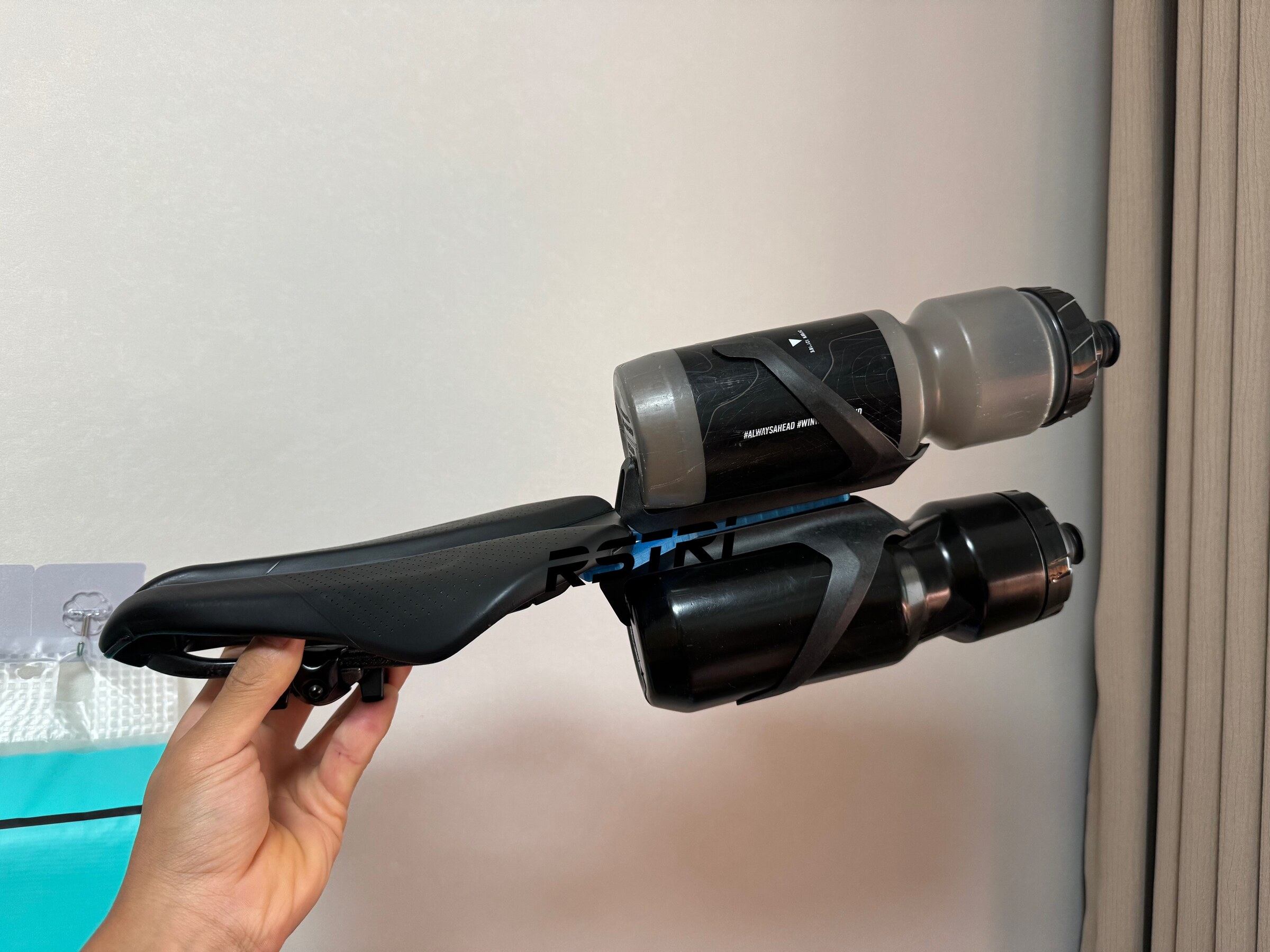
Long-course racing makes carrying fluid necessary. The useful question is where to carry it without adding avoidable drag. BTA means between the arms; BTS means behind the saddle. Frame positions include the downtube and seat tube. All four locations interact with the rider, bike, bottle and mounting hardware.
What AeroCoach actually measured
In a 2020 velodrome test, AeroCoach used its Garmin Track Aero System to compare bottle configurations with no bottle. Jessica Rhodes-Jones rode a Canyon Speedmax CF SLX. The test included 500 and 900 ml round bottles, a 440 ml Giant AeroVault bottle and a 750 ml Pro AeroFuel BTA drink system. The watt differences below are AeroCoach's measurements for this rider and setup, not RSTRI test results. AeroCoach reported values at 40 and 30 km/h; the comparison here uses 40 km/h (about 25 mph).
Four positions, one 500 ml round bottle
- BTS, behind the saddle: +0.7 W at 40 km/h; +0.3 W at 30 km/h.
- BTA, between the arms: +1.2 W at 40 km/h; +0.5 W at 30 km/h.
- Seat tube: +3.6 W at 40 km/h; +1.6 W at 30 km/h.
- Downtube: +5.0 W at 40 km/h; +2.1 W at 30 km/h.
These are differences against the no-bottle baseline, not guaranteed savings from changing hardware. The rear bottle was best of these four configurations in this specific test. The order can change with a different rider or bike.
Why BTA can be practical
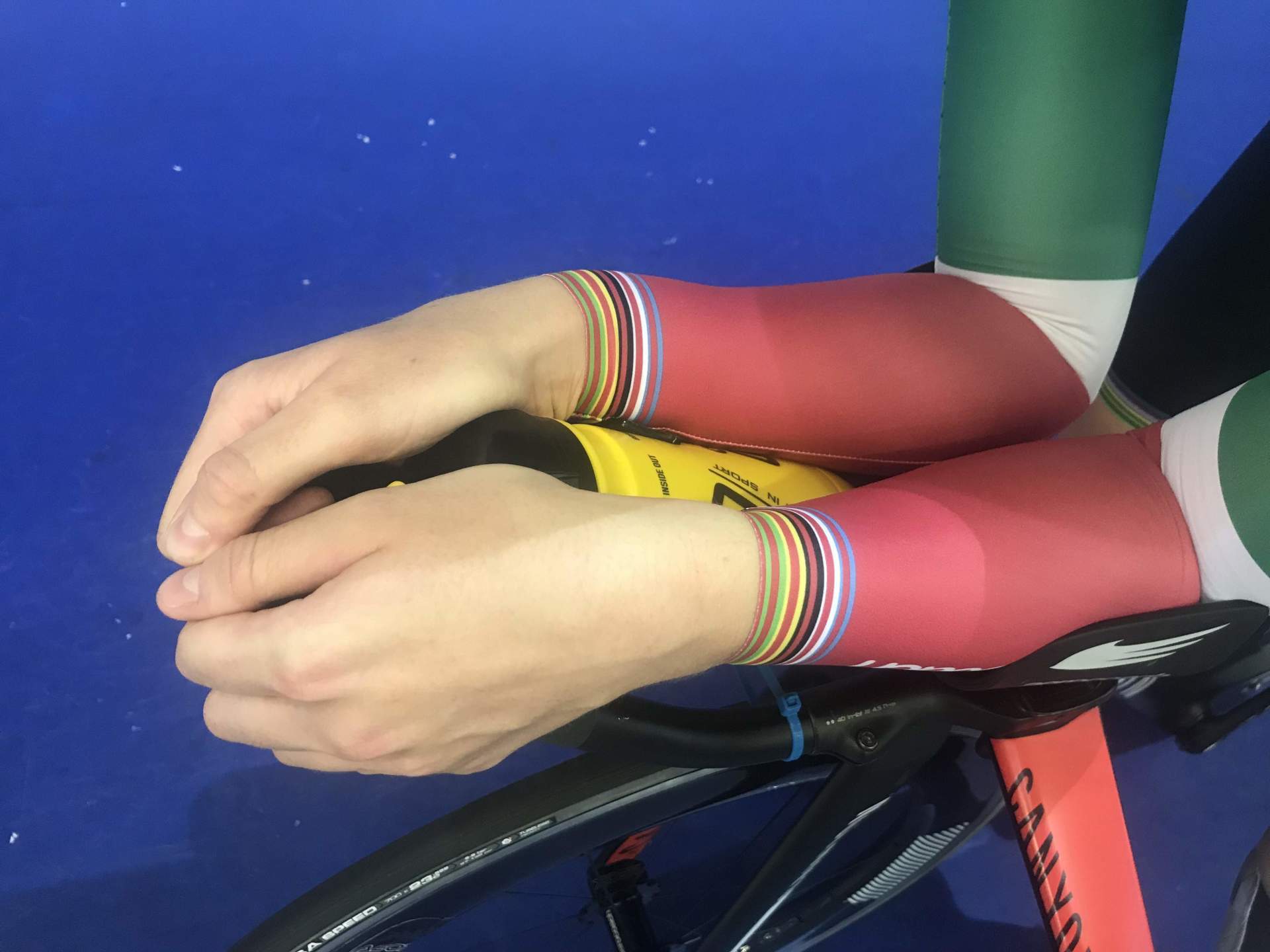
The space between the forearms can shelter a bottle in the front-end airflow. AeroCoach noted that BTA tends to work better when the arms are close together. Jessica's +1.2 W result was small, while the bottle remained visible and easy to reach. An accessible bottle can support a consistent drinking plan without a long break from the aero position. A reservoir, straw and different arm spacing can change the result: the tested 750 ml Pro AeroFuel system measured +1.8 W at 40 km/h, and AeroCoach warned that an exposed straw can itself be costly in other riders' tests.
Why a frame bottle may cost more
A conventional round bottle on the downtube may protrude into relatively clean airflow and disturb the frame section behind it. In this test, the 900 ml round bottle on the downtube cost +8.2 W at 40 km/h. Bottle shape matters: the 440 ml Giant AeroVault aero bottle on the downtube cost +1.1 W. Those bottles differ in capacity and shape, so the numbers do not isolate shape alone or condemn every frame-mounted system. An integrated bottle on another frame may behave differently.
BTS is a region, not a fixed result
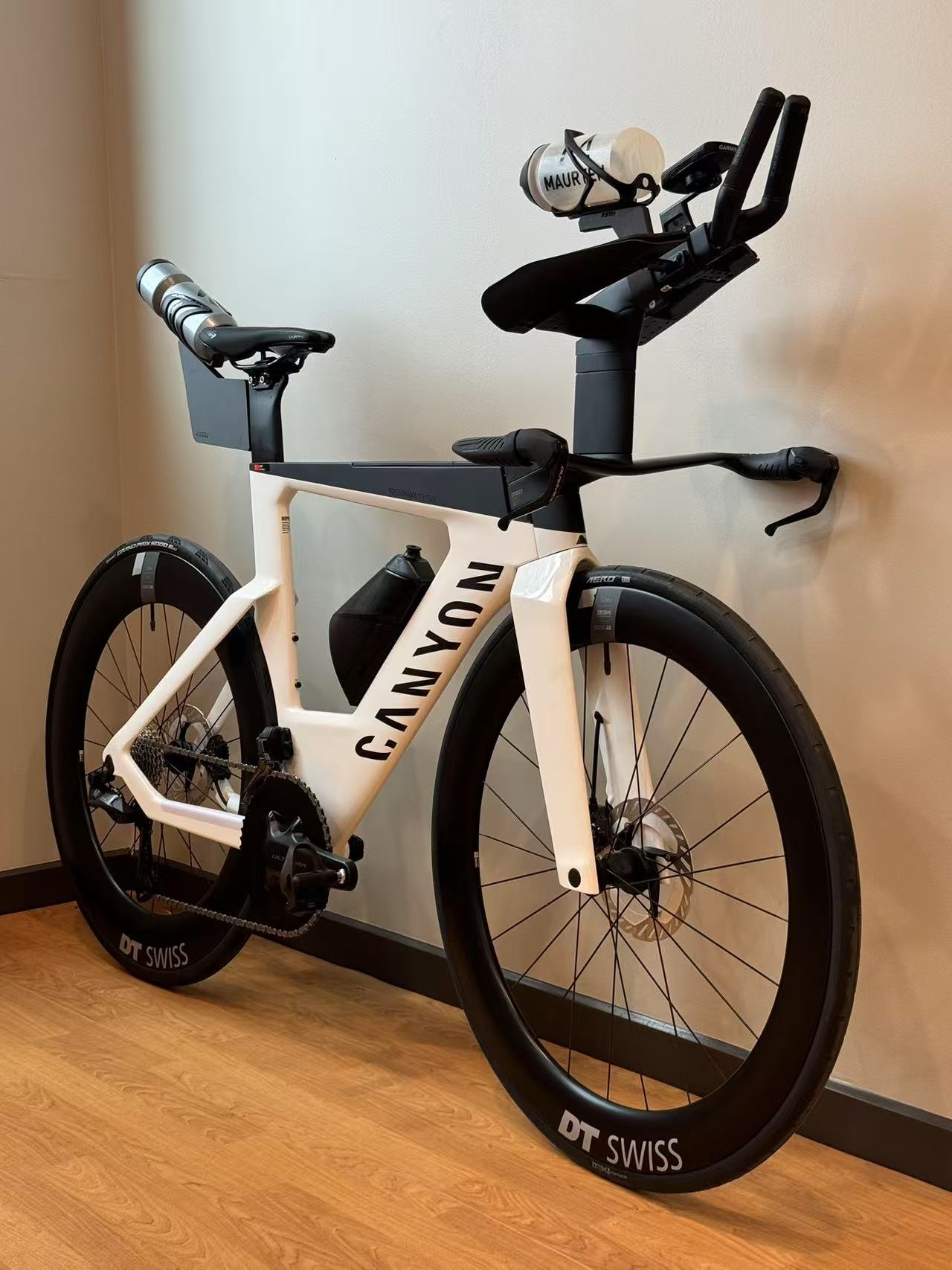
A bottle behind the saddle can sit in air already disturbed by the rider. That helps explain AeroCoach's small penalty here, but “behind the saddle” says little about the bottle's exact height, angle or distance from the rider. A rear bottle placed farther back or higher may meet different airflow. Capacity also matters: AeroCoach measured +2.5 W at 40 km/h for a 900 ml round bottle behind this saddle, compared with +0.7 W for the 500 ml bottle. This is a comparison of different complete configurations, not a bottle-size law.

What to take onto the road
Choose enough fluid first, then check access, retention and compatibility. BTA and carefully placed BTS systems can be attractive choices, but no location wins for every rider. Test the full race setup where possible: posture, bottles, cages and straws together. Part 2 explains why the bottle's precise position in the rider's wake matters.
Next in RSTRI LAB · Part 2
Behind the Saddle Hydration: Why Bottle Position Matters More Than You Think
https://www.rstri.cn/en/tech/behind-saddle-hydration-position-rider-wake ↗
Sources and further reading
Triathlete — Expert Tested: The Fastest (and Slowest) Places to Attach Your Water Bottle (editorial discussion of AeroCoach's test):
AeroCoach — Water bottle aero testing (original test and numerical data):
RSTRI LAB
Continue Exploring
Behind the Saddle Hydration: Why Bottle Position Matters More Than You Think
A bottle behind the saddle may sit in the rider’s wake, but height, angle and distance change the airflow it meets. The relevant question is where the bottle sits relative to this...
Learn More → Featured
RSTRI LAB | Get Faster for Free: Triathlon Aero Position Guide
Using real race photos, we look at aerobar width, head-and-arm integration, flexibility, drop and reach—and why the fastest aero position is the one you can safely hold for hours.
Learn More →