RSTRI LAB | Get Faster for Free: Triathlon Aero Position Guide
Using real race photos, we look at aerobar width, head-and-arm integration, flexibility, drop and reach—and why the fastest aero position is the one you can safely hold for hours.
I've been doing triathlon for more than a decade... yes, more than a decade now.
I've gone through generation after generation of equipment, spent plenty of money, and stepped into plenty of traps along the way. Of course, I've also found a lot of genuinely good stuff.
So recently I thought I'd start a small series about the things in triathlon that can make you a little faster—whether they cost money or cost nothing at all.
Sometimes it's equipment. Sometimes it's position. Sometimes it's just a tiny detail that's surprisingly easy to overlook.
None of this necessarily needs to be complicated. Some changes are things you can feel almost immediately.
Think of this as a record of the mistakes I've made, the tuition I've paid, and a few personal conclusions collected over the years. Hopefully it gives newer athletes a useful reference—and gives the veterans something entertaining to argue about.
These are personal opinions, written as the ideas come. If any of this helps you save a few watts, or avoid a few unnecessary detours, then it has done its job.
After all—who doesn't want to get a little faster for free?
And hopefully, in the years ahead, we'll see more and more Chinese faces racing in KONA.
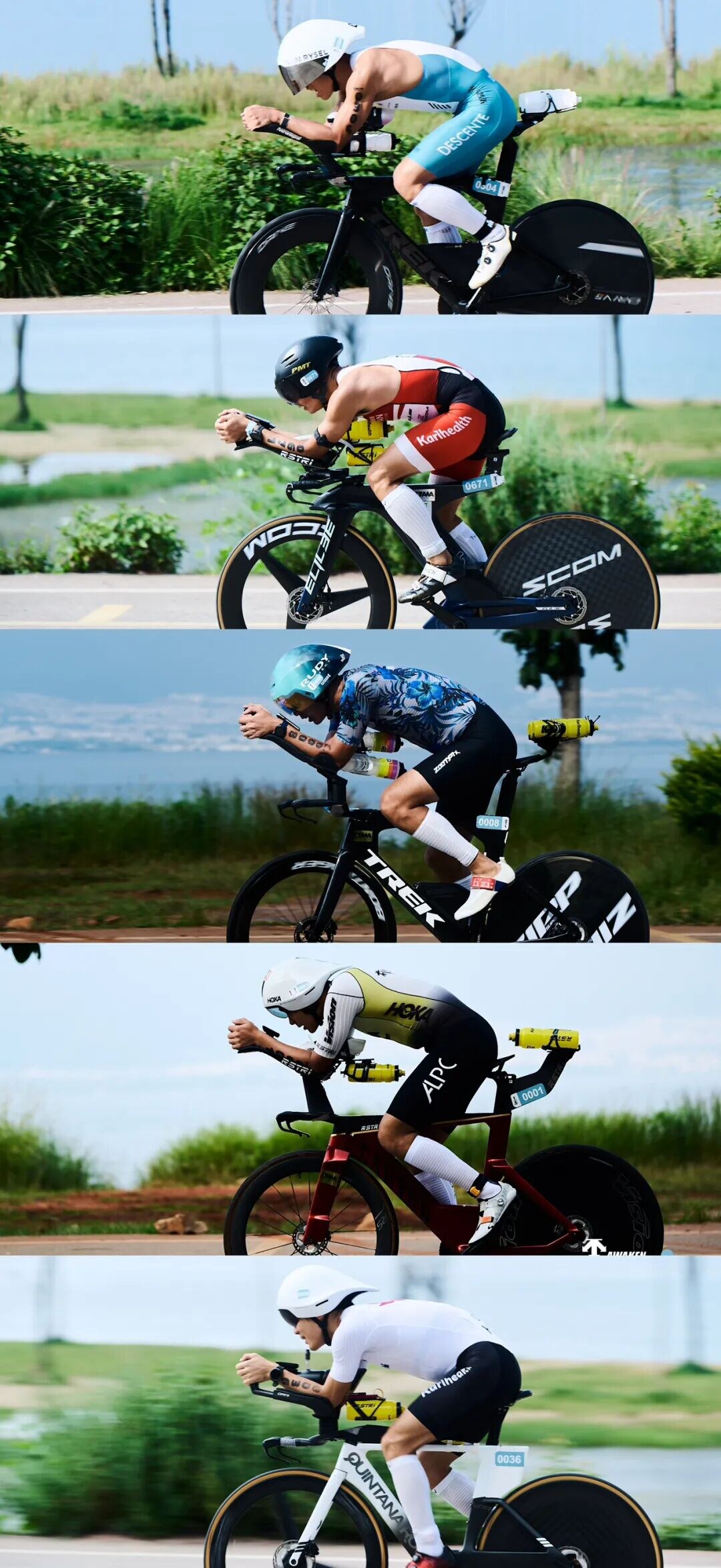
After the Dali race, I spent quite a bit of time looking through photographers' images from the course. Some riding positions simply look fast. Others still look distinctly old school.
Put photos side by side and the difference can be surprisingly obvious.
Of course, an aero position is never as simple as “lower is faster.” Flexibility, front-end drop, aerobar width, hip angle and saddle position all interact.
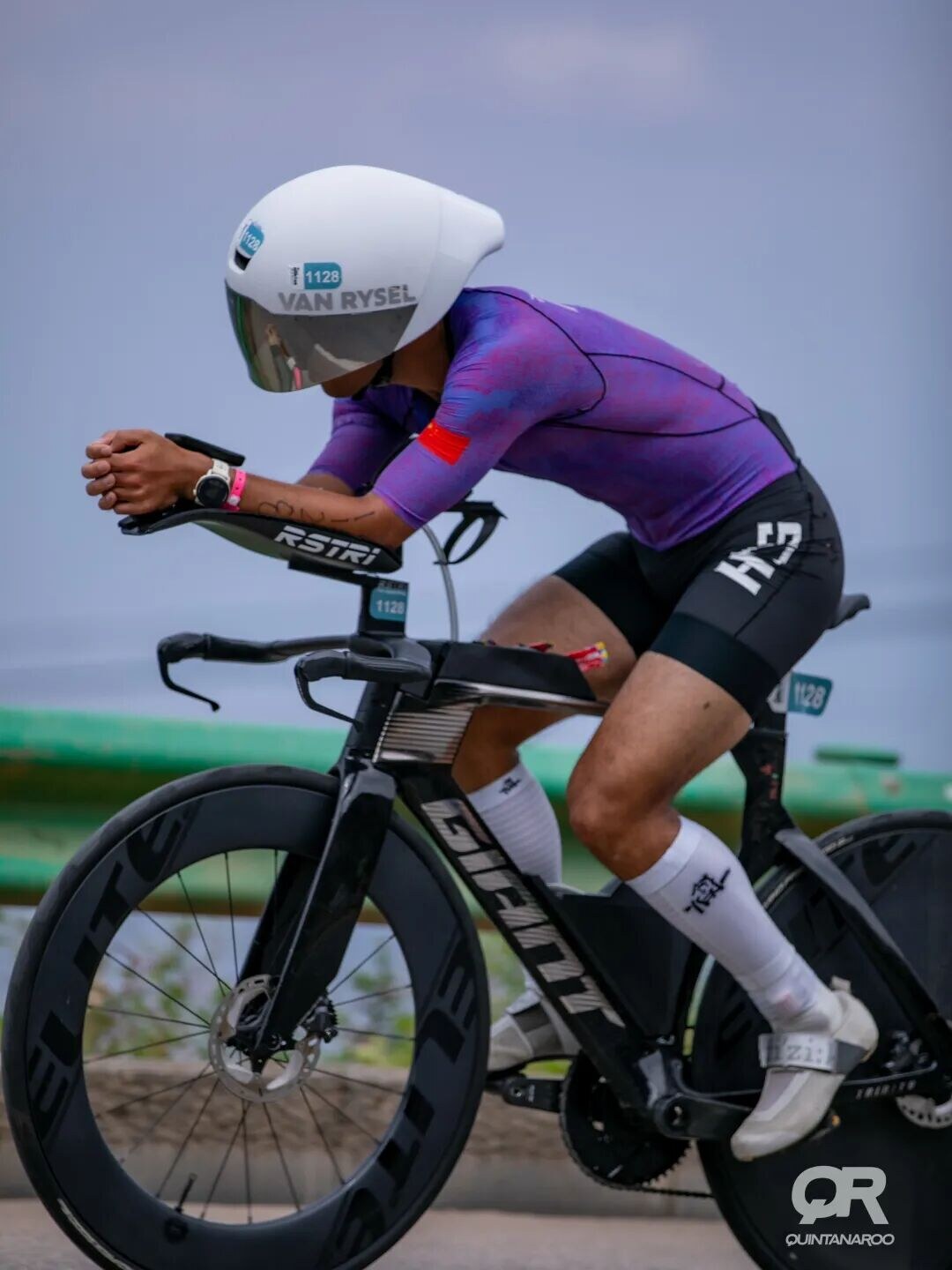
So we're not going into complicated aerodynamic equations today. Instead, let's look at real riding positions: why some of them look fast, and what ordinary age-group triathletes can learn from them.
Note: BTA refers to hydration mounted between the arms; BTS refers to hydration mounted behind the saddle.
01 | Are Narrower Aerobars Really Faster?
Let's start with Bass.
He did wind-tunnel testing earlier this year, and his current position and equipment combination is the fastest setup tested for his individual body and riding style.
There's one particularly interesting detail: his arms aren't absurdly narrow.
Why? Because if his elbows were brought too close together, he wouldn't be able to lower his head any further.
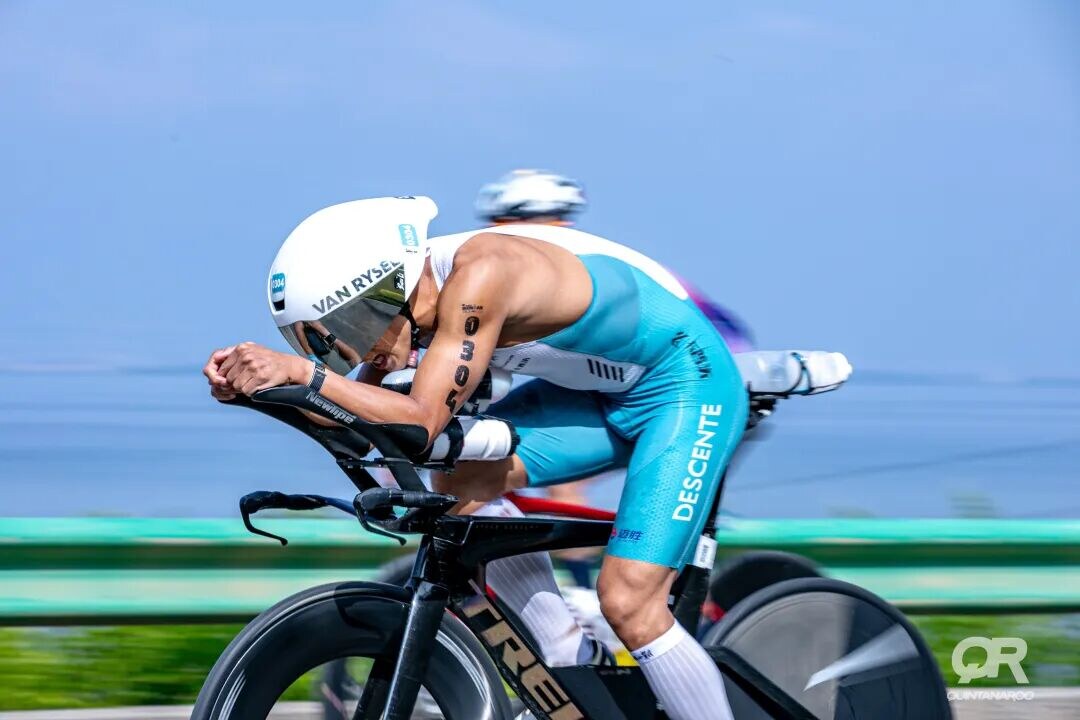
One of the key features of his current position is that his chin sits almost on top of the BTA bottle. Once the head is lowered, airflow can travel relatively smoothly from the top of the helmet across the back, creating a much more continuous profile. You can even see that his visor is almost touching his forearms.
This highlights a concept that is very easy to misunderstand:
Does narrower automatically mean faster? Not necessarily.

Bring your forearms tightly together and then try to move your chin down toward your elbows. Most people will immediately feel the trapezius tighten and the front of the shoulders start to fatigue.
Holding that for 30 seconds may already be uncomfortable, never mind several hours.

The biggest problem with an aero position isn't that it is “not narrow enough.” It's making it so narrow that you cannot hold it.
The useful kind of narrow is an elbow spacing that allows your arms and head to work as one shape, reducing frontal area and unnecessary turbulence.
And, of course, safety always comes before aerodynamics. When you need to check the road, lift your head. Once it's safe, return to the aero position.
02 | Flexibility: The Hidden Performance Metric
Next, look at Liu Debin.
If we were handing out a “flexibility talent” award, his position would absolutely deserve a mention.
There is a very obvious front-end drop, an almost horizontal torso, and a relatively upright pelvis. The hip angle between the thighs and torso is especially aggressive.

And those hamstrings... I've run out of ways to say I'm jealous.
What's even more impressive is how efficient the position appears to be. At around 207 W, he can maintain roughly 42 km/h.
His saddle position isn't especially extreme. He hasn't pushed it wildly forward simply to follow the latest trend. But his arms extend very far forward.
For most people, that combination of body proportions and flexibility is extremely difficult to copy exactly.

If we really want to nitpick, there is a slight discontinuity between the tail of the helmet and the back, which may create some additional turbulence.
And then there's the other issue—he's missing a BTS that saves 12 W.
That's an equipment problem. Genetics can't fix that one.
03 | An Almost Perfect Position
Cao Junyu's position is one of those setups that simply looks fast.
The integration between helmet, back and arms is excellent, and there are very few obvious weaknesses.
There is still some room to optimize the BTS. A new one is already on the way.
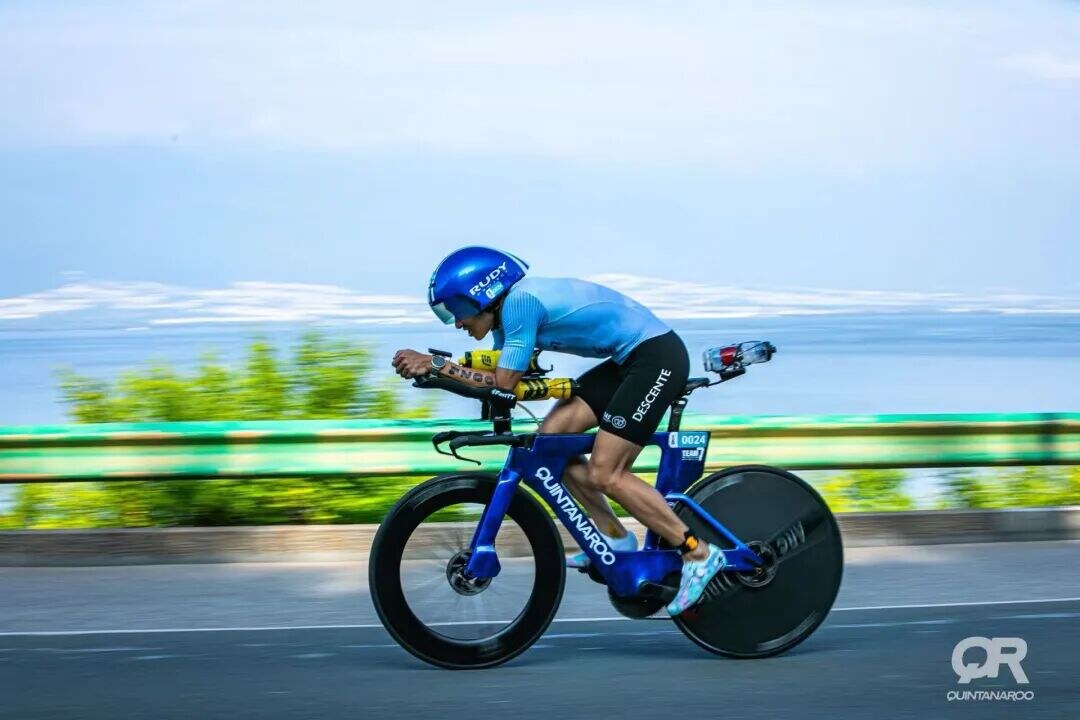
If I absolutely had to find something to change, I might experiment with slightly more aerobar tilt.
But this point matters: more tilt is not automatically better for everyone.
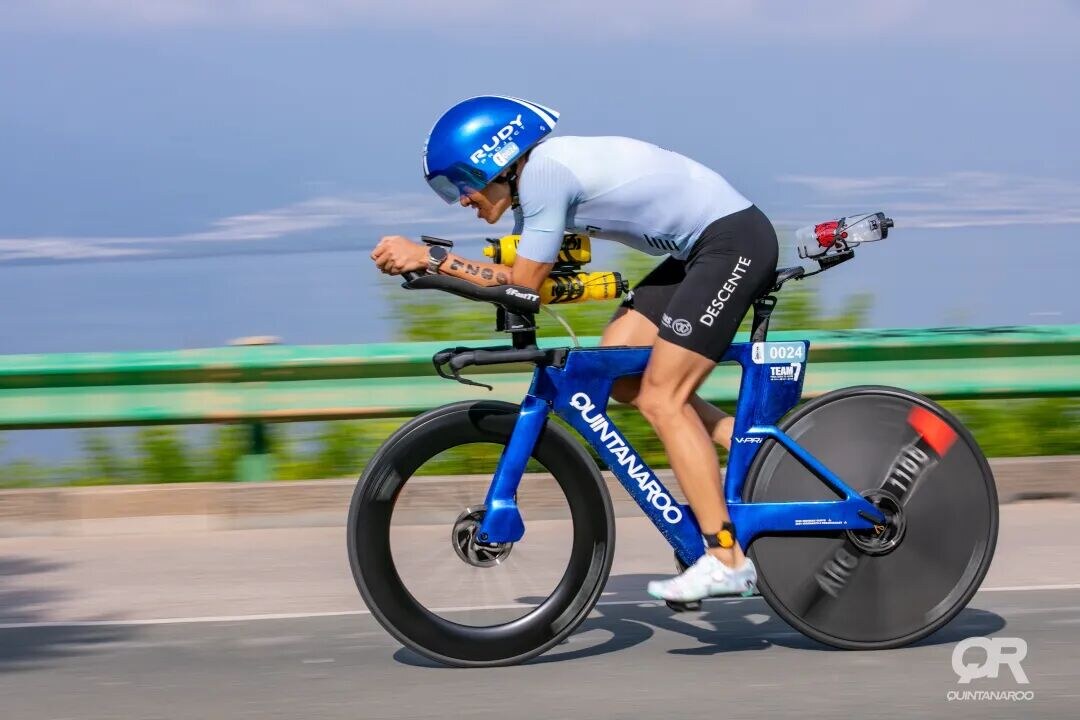
An aero position ultimately comes back to one basic question: can you comfortably hold it for several hours?
Being 5 W faster in a wind tunnel doesn't help much if your lower back, shoulders and neck are destroyed halfway through the race.

Andrew Shen is similar: he simply looks fast, with even better integration between the aerobars and head.
04 | Make the Arms and Helmet Work as One Shape
Wang Ou's position has one very obvious strength: his arms and helmet integrate extremely well.
This is also one of the important directions in modern triathlon positioning.

The goal isn't simply to make the body as low as possible. Instead, try to make the head → arms → back form one continuous, smooth profile.
Airflow doesn't like a sudden giant step. Every protrusion, hollow or abrupt break in the body's shape can potentially encourage additional flow separation and turbulence.
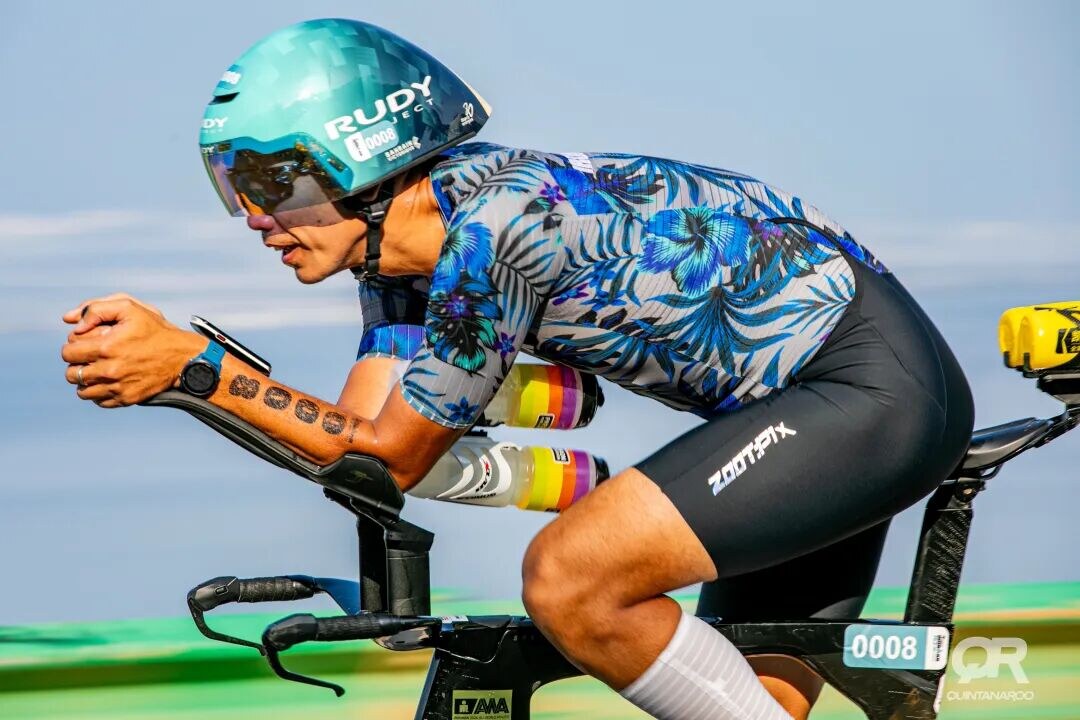
His saddle position is also relatively forward, with him sitting toward the front half of the saddle, helping open the hip angle. The curve of the back is smooth as well.
There may still be room to reduce the front-end height further. The BTA and BTS could also be optimized.
Cai Ke also has excellent flexibility. His pelvis remains relatively upright, while much of the flexion comes through the thoracic spine. That helps lower the head and reduce the body's overall frontal area.
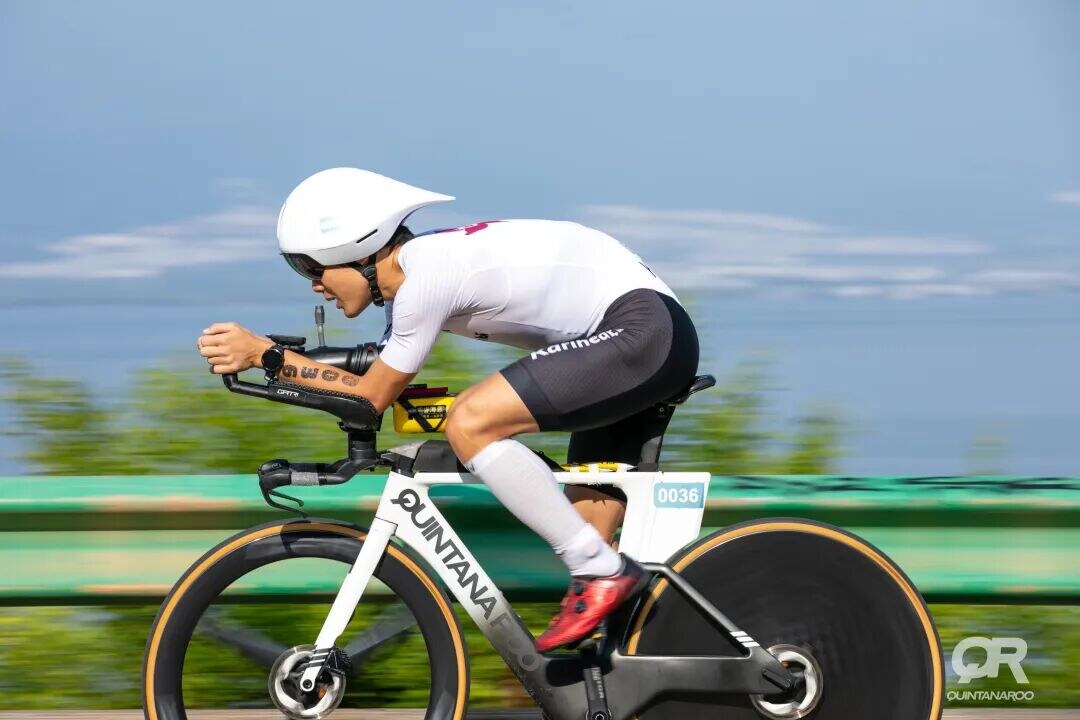
And then there's Peter—the monster.
He doesn't seem to need the newest integrated aerobar, or every single detail pushed to the absolute limit.
Because—he has power.

And the position still looks like something from a few years ago.
That's actually a useful reminder. We love asking how many watts a frame, aerobar or bottle mount saves. But don't forget: a stronger rider can sometimes simply overwhelm those differences with more power.
Aerodynamics matter. Just don't get so absorbed in equipment that you forget to train.
05 | Not Everyone Needs a Huge Drop
Now look at Lin Haoran.
His helmet-to-back integration has always been good, but his overall flexibility is relatively average, so there is very little obvious front-end drop. The result actually looks quite comfortable.
In recent years, whether we're looking at short-distance ITT or long-course triathlon, extremely large drops don't seem to be the dominant trend anymore.

Lin's saddle is positioned very far forward, and his entire centre of mass is visibly shifted forward. The nose of the saddle even extends beyond the bottom-bracket centre.
One of the main reasons is to open the hip angle as much as possible.
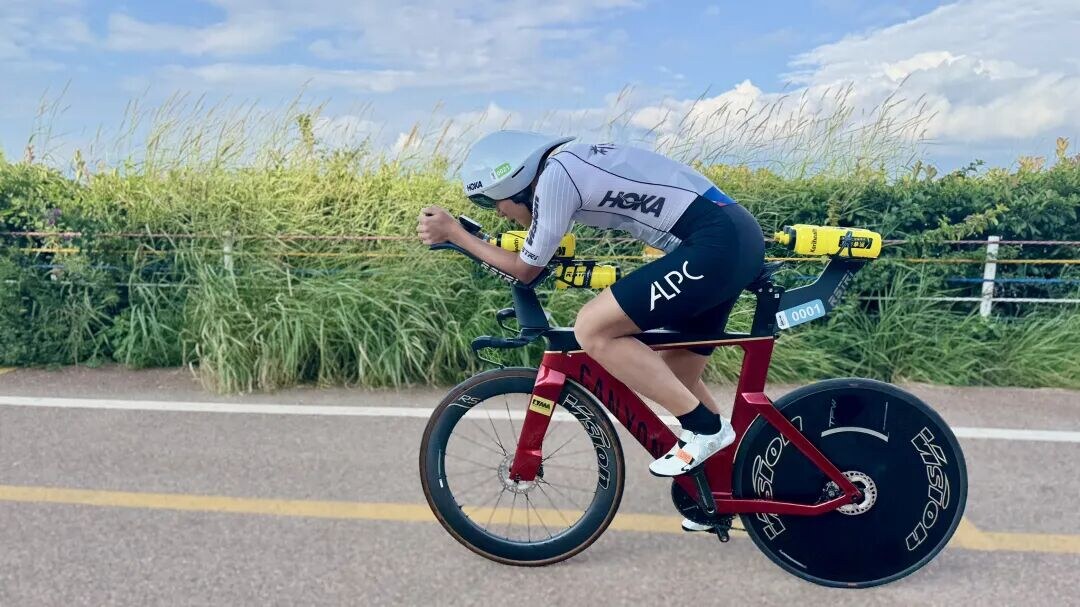
Why are so many triathlon saddles moving further forward? That deserves an article of its own.
For most ordinary people, modern life is constantly taking away some of our physical capacity. Long hours sitting, limited hip mobility, tight hip flexors and restricted hamstrings can all affect cycling position.
Pelvic position, in turn, directly influences how you produce power while cruising.
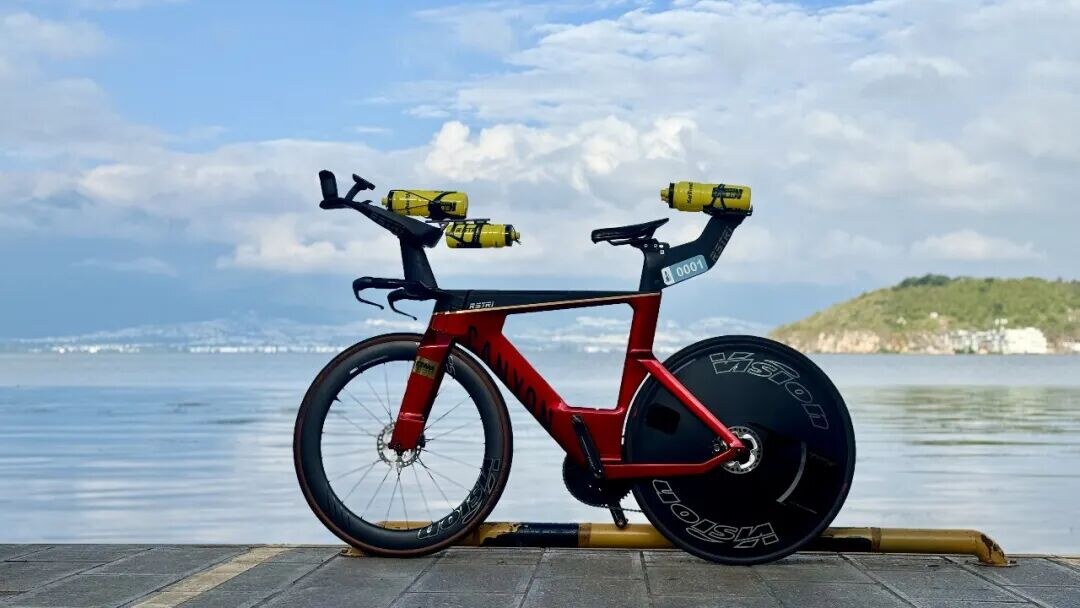
These things can absolutely be improved. Strength work, flexibility training and postural training can all improve body control.
It's a big subject. We'll give it its own article later.
06 | Turn Body Weight Into Free Speed
Mao Aqiang's position and equipment are also difficult to fault.
The saddle is pushed almost as far forward as it can go. The angle between the upper arms and torso also looks very natural.
I previously came across an interesting discussion online: How do you turn body weight into forward power?

It sounds a little mystical, but the basic logic isn't actually that complicated.
A more forward riding position, combined with a more natural upper-arm angle, can place the rider's pedalling forces and the bike's centre of mass into a more useful geometric relationship.
Put simply, it's not that “further forward is always faster.” It's about changing the rider's position so the body can interact more effectively with the bike as a complete system.
Of course, saddle position, bottom bracket, front-wheel axle, body proportions and many other variables all matter.
So please don't read this and immediately go home and slam your saddle all the way forward.
07 | What Does Extreme Reach Look Like?
Now look at Zeng Fanchen.
This position belongs firmly in the “maximum reach” category.
The rear of his hips is already beyond the front edge of the seatpost. His elbows also extend clearly beyond the front of the aerobar structure.
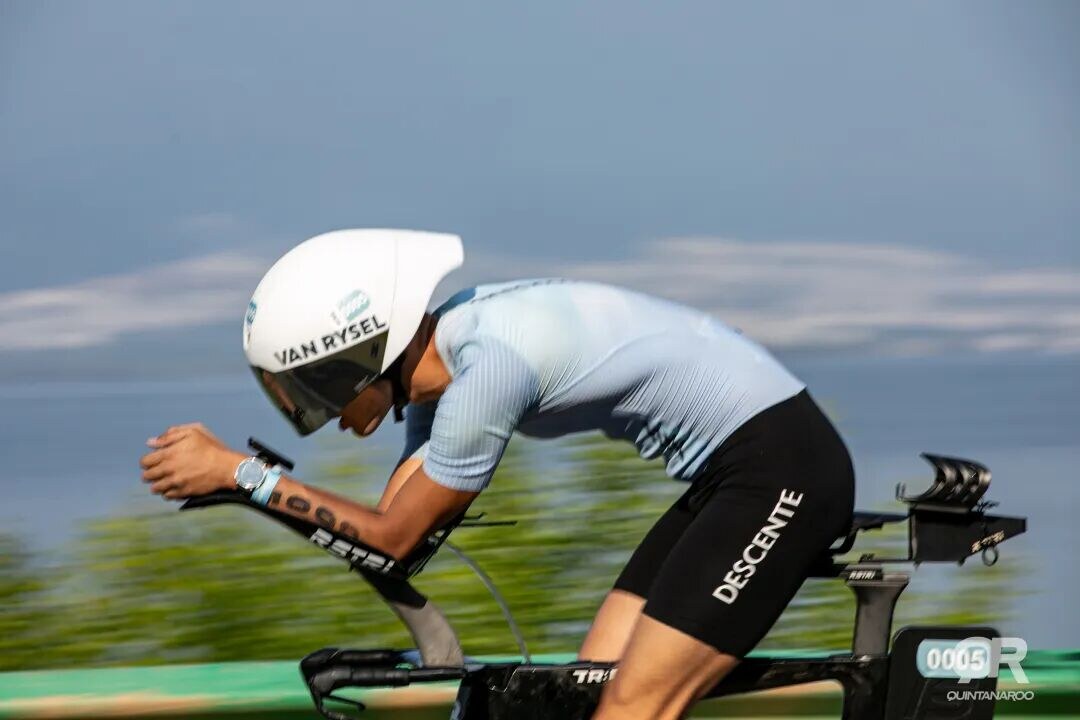
But one thing is crucial: the entire position remains very well integrated.
There are no obvious discontinuities between helmet, arms and back. His visor is almost touching the bike computer.
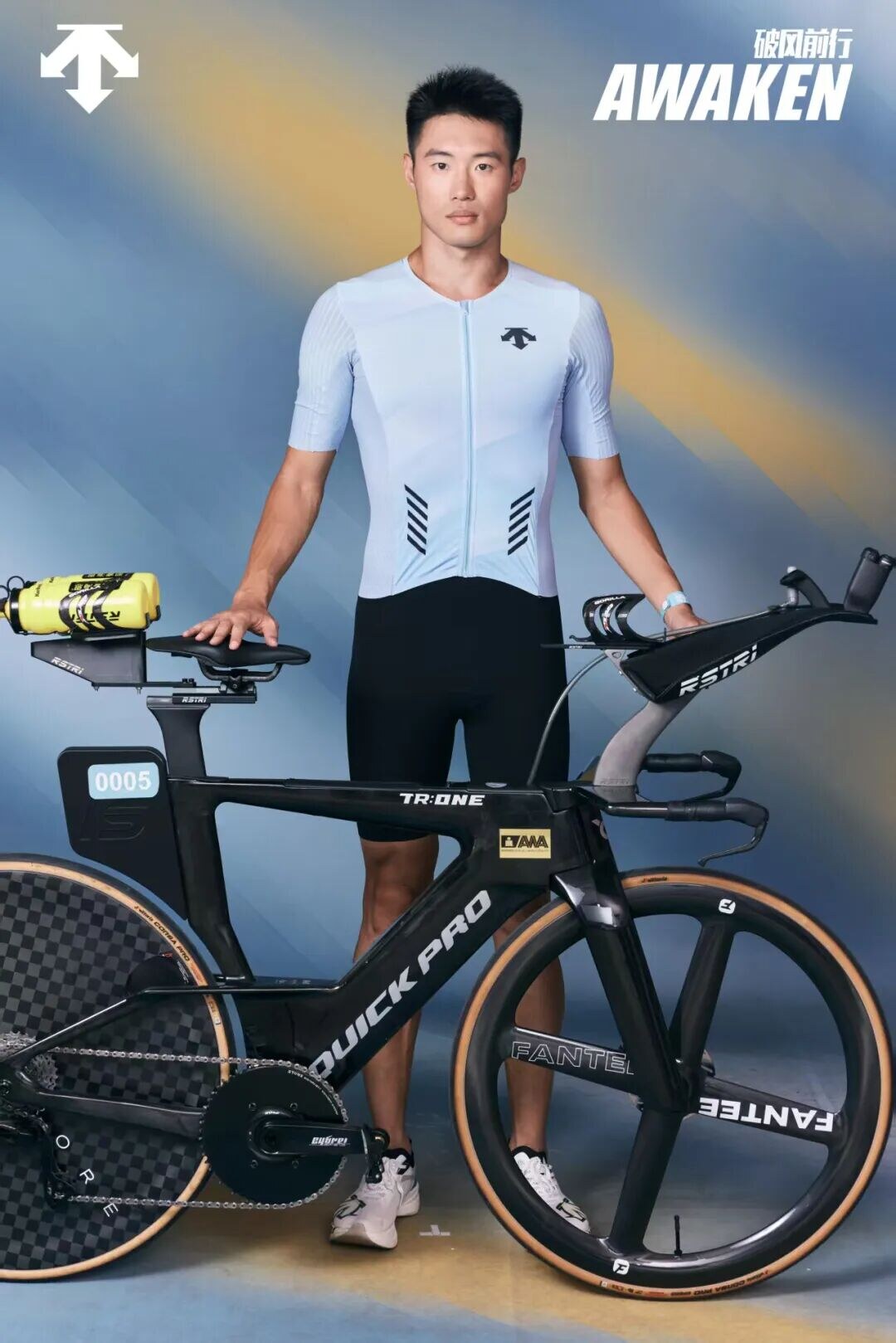
It's a fascinating example.
Once the whole body has moved sufficiently far forward, seeing the saddle nose ahead of the bottom bracket no longer looks particularly strange.
From a race-rules perspective, aerobar position must also comply with the applicable WTC regulations. You can't simply extend them as far as you want. Even an extreme position has to be legal first.
A lot of people have asked what the saddle-rail accessory is for. We'll cover that in the next article.
Liu Haocheng simply looks comfortable—and that's a very nice helmet.

Huang Yifan also has excellent flexibility. Generally speaking, people with good flexibility don't tend to be slow swimmers either.


And after seeing yellow bottles scattered all over the Dali course... that one hurt a little.
08 | Buying Great Equipment and Forgetting the Most Important Part

At this point, a lot of people may be thinking:
“Should I switch to a lower cockpit?”
“Should I make my aerobars narrower?”
“Should I buy a faster helmet?”
Sure. All of those can make sense.
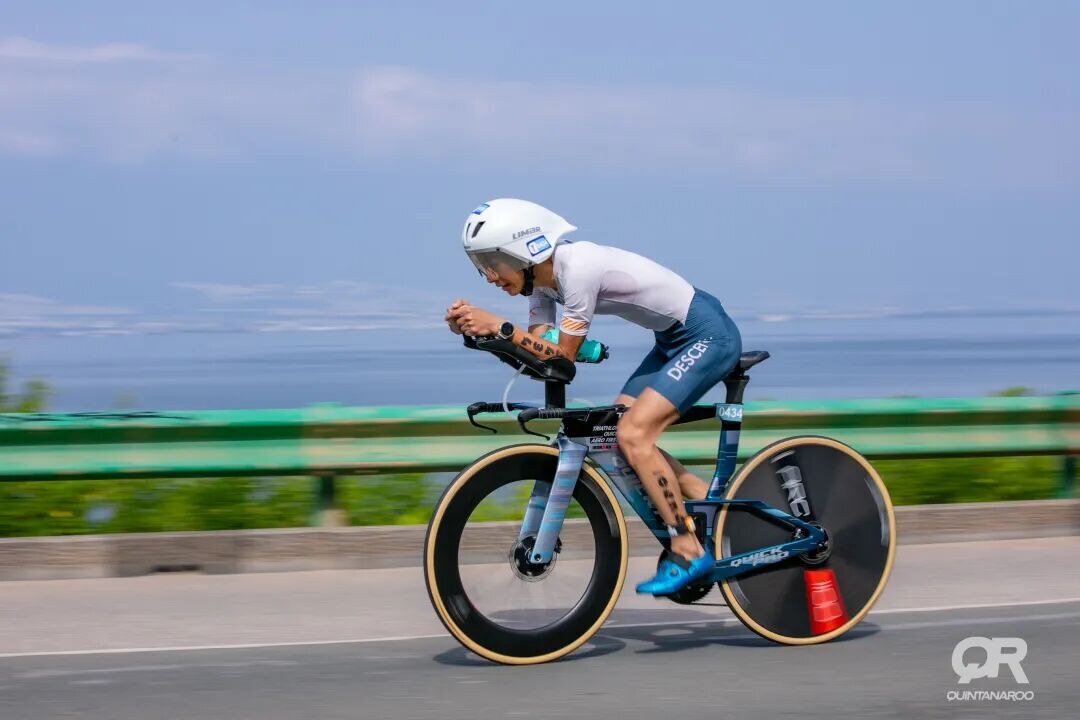
Over the last few years everyone has been chasing hidden cables, integrated cockpits, integrated hydration, faster frames and faster wheels.
Manufacturers spend enormous amounts of time trying to reduce turbulence around frames and drag around cockpits.
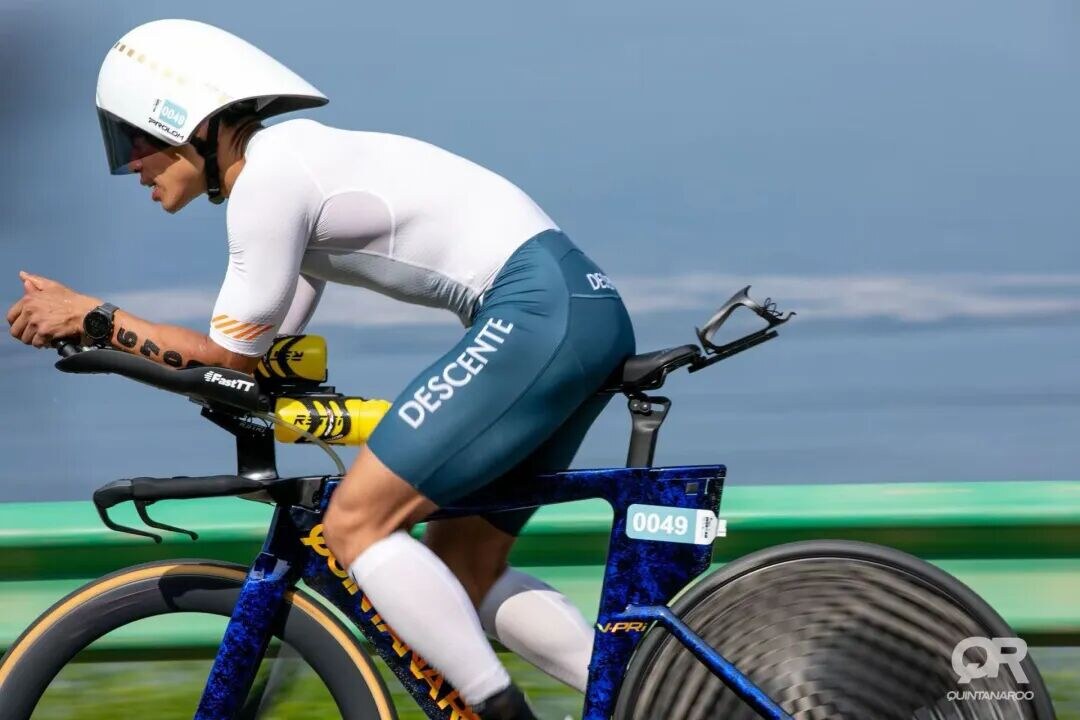
But there's one thing people often forget:
The rider is the biggest source of aerodynamic drag.
You can spend a fortune on an aero frame, aero wheels and an integrated cockpit. The manufacturer tells you, “This saves a few watts.”
Then you race with your head sticking up the entire time.
At that point, you've basically handed those carefully engineered watts straight back to the wind.
09 | A Look at the “Textbook”
Finally, let's look at riders whose positions I particularly like right now.
SAM's position has long been one of my personal benchmarks.
Helmet, arms, back, cockpit accessories and hydration are all extremely well integrated, leaving very few opportunities for the airflow to get messy.
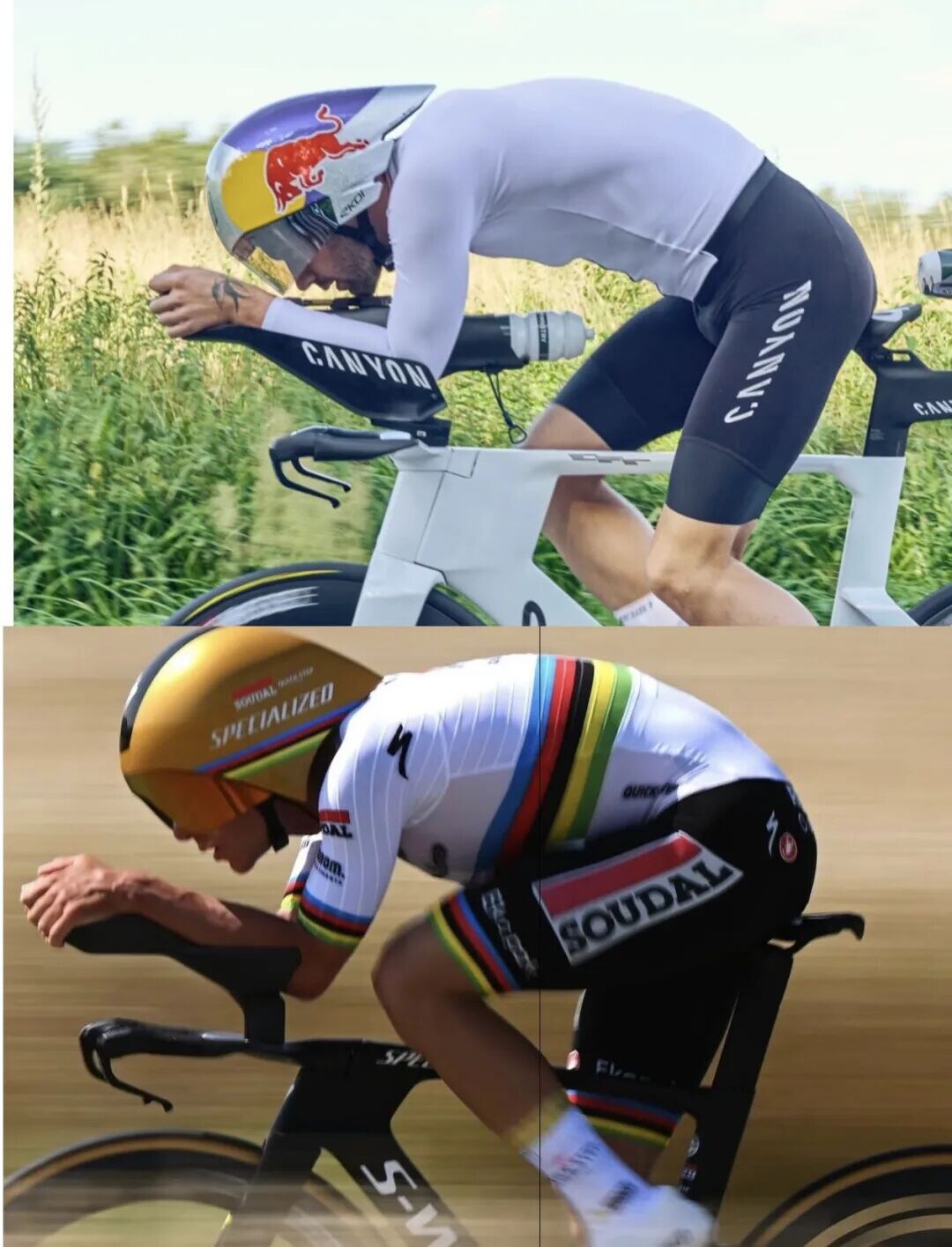
There is another thing worth learning from professional riders: their positions are never permanently fixed.
They return to the wind tunnel regularly and keep making adjustments—sometimes only a few millimetres or a few degrees—as their bodies and equipment change.
So there is no universal answer to the “fastest position.”
The fastest position for you is the one that suits your body and that you can actually maintain.
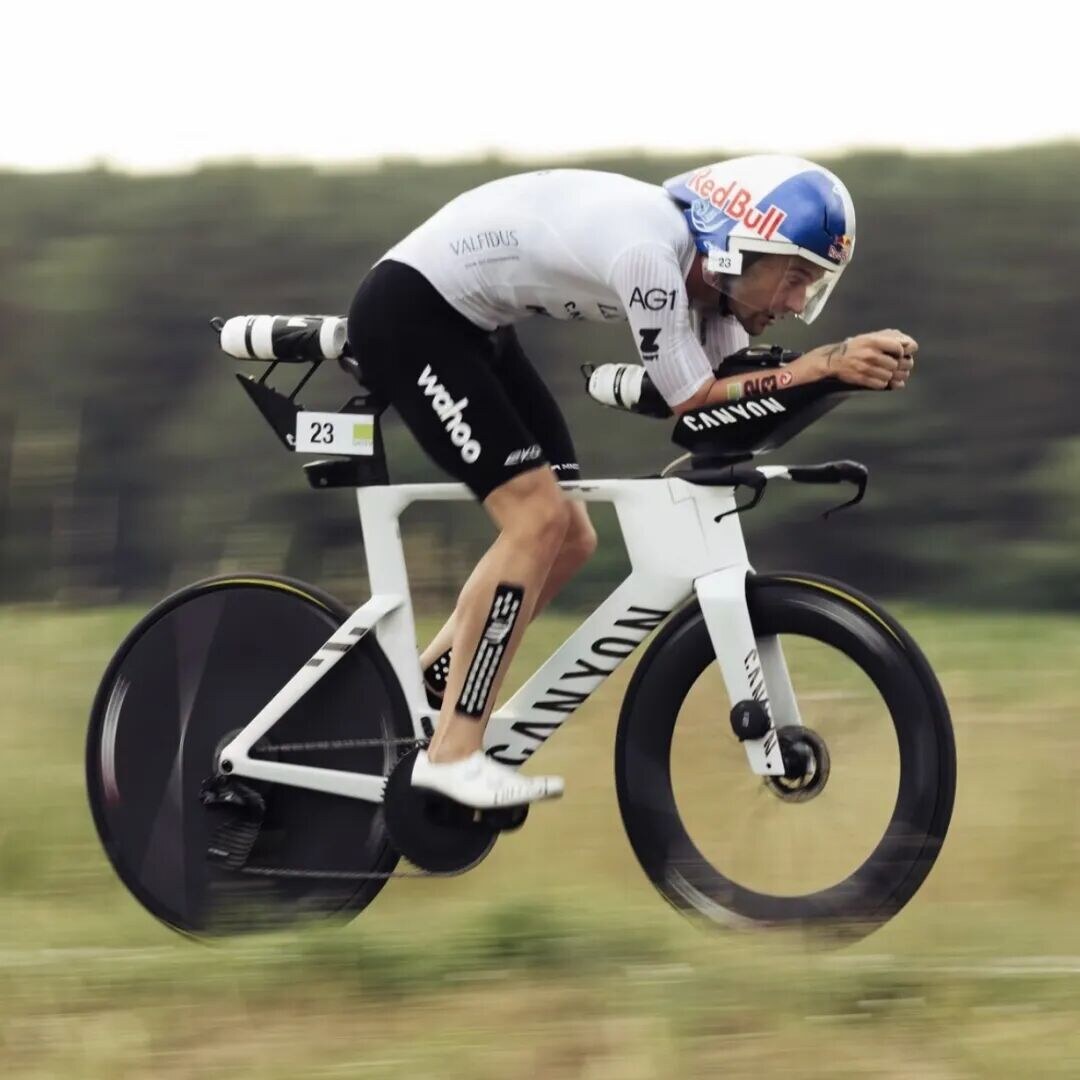
At first glance, his aerobar angle looks to be only around 20°. Yet with the forward riding position and strong integration of head, arms and back, the overall aerodynamic shape remains excellent.
An aero position is never simply about getting lower.
It's about reducing frontal area, smoothing the overall profile, keeping the body stable and—most importantly—being able to stay there.
As for the obvious question, “How can you see the road when you're that low?”
Raise your head whenever you need to check the road, then return to the aero position when it is safe.
Saving a few watts matters. Safety always comes first.

Compared with this year, SAM's position last year was noticeably less integrated around the aerobars.
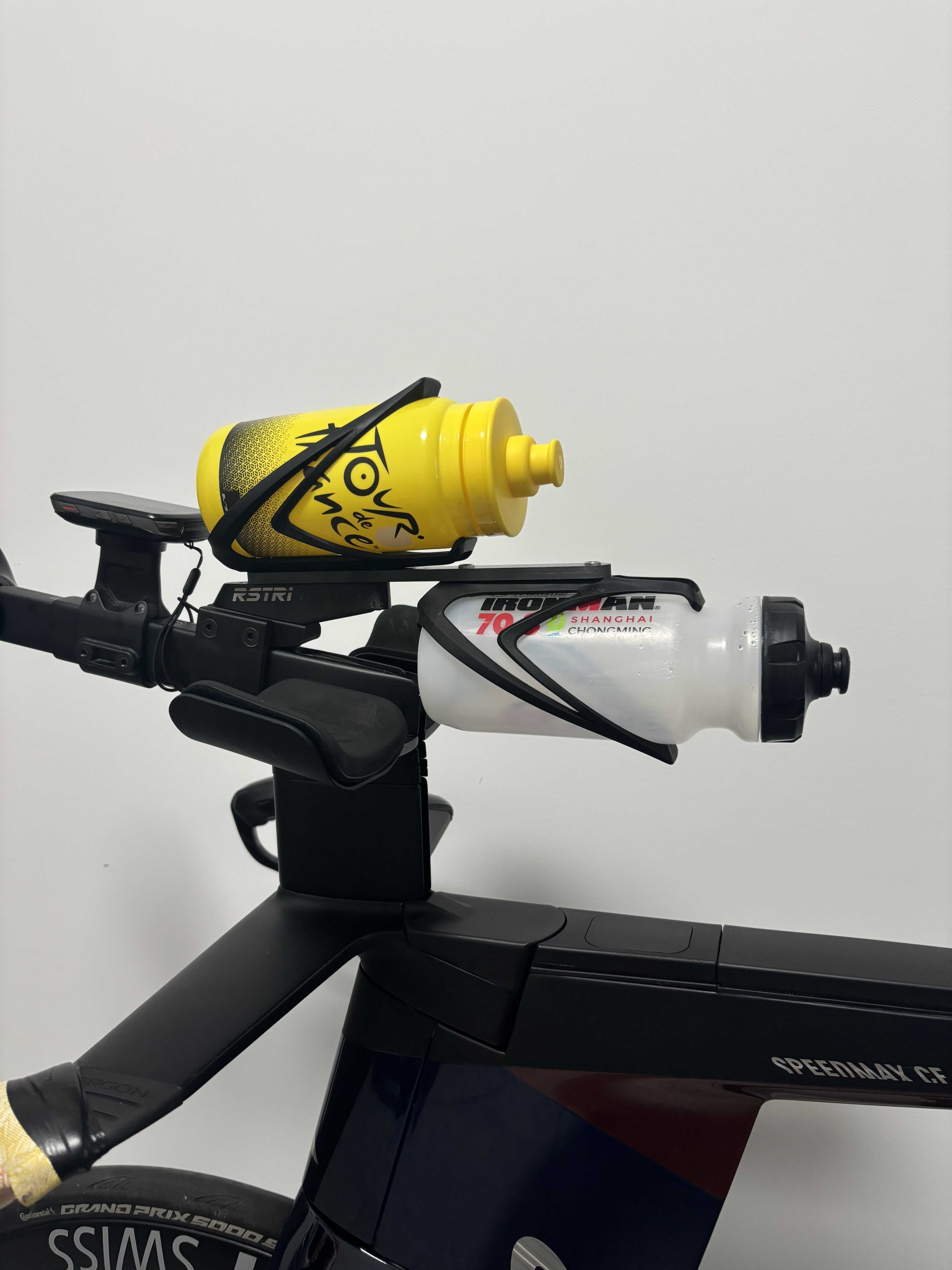
One common feature among these faster riders is the use of aerodynamic accessories such as BTA and BTS hydration systems, together with the increasingly popular shovel-style closed aerobars.
RSTRI offers solutions for a wide range of bike brands and models, with both ready-made products and custom engineering available. Contact RSTRI if you need help finding the right setup for your bike.